When most of us think of sin we probably have in mind a few specific actions that are particularly horrific. But the Bible's depiction of sin is quite a bit more sweeping than our idea. The main concept is conveyed by a Hebrew word (hata) that is used nearly six hundred times in the Old Testament and a Greek word (hamartano) used nearly three hundred times in the New Testament. Both of these words originally came from the sphere of archery and meant the same thing: "to miss a mark." The Bible makes clear that one can miss a mark by ignorance of what one is supposed to hit (see Lev 5:15-16), be deliberately aiming at a different target (see Is 1:4) or by aiming at the right standard but falling short of it (see 1 Sam 12:23). Another biblical word for sin ('abar in Hebrew or parabaino in Greek) conveys the idea of transgressing, crossing a boundary that God has established and forbidden us to cross. Adam and Eve's eating the forbidden fruit was a transgression, and for other examples, see Jeremiah 3418 and Daniel 9:11. It as if God has drawn a line in the sand and said, "Do not cross this," but people do. A third aspect of sin is rebelling against God's authority (pasa in Hebrew or apeitheo in Greek), and thereby breaking off the relationship God desired. Amos 1-4 contains repeated references to the ways Israel has rebelled against God. A fourth aspect of sin in the Bible is translated "iniquity," and the Hebrew word behind this ('awon) conveys the idea of twisting or distortion Sin is not wrong actions, it is a distortion or perversion of one's entire character. See Job 33:9 and Proverbs 12:8 for examples of this.
(pp. 98-99, Life in the Trinity, Douglas Fairbairn)
Steven Paulson does have a great turn of phrase sometimes. Take these for a few examples:
"Christ gave this description when he said in Mark 3:27, that the Strong Man must be bound before his house can be pillaged, and Christ had come to do just that. Yet, it is an odd reality, called in the modern world the "Stockholm syndrome," that prisoners identify themselves with their captors, and even desire in their hearts to be imprisoned to them" (p.159, Lutheran Theology)
"Being a theologian of the cross means the Christian's life is hid under the sign of its opposite (death, bondage, suffering) so that the prisoner of sin has now become the French underground, the embedded terrorist to the body of sin, and so faith is not the end of struggle but its beginning." (p. 171, ibid)
God made him who had no sin to be sin for us (2 Cor 5:21)
Christ redeemed us from the curse of the law by becoming a curse for us (Gal 3:13)
Sometimes a person is so associated with something that we stop using an adjective and use the substative. A body builder can, at a certain point, cease "having muscles" and we call him "all muscle." Christ becomes so exclusively associated with sin that it loses any sense for anyone else, and we say of him not only that he is a sinner, but the Sinner.
When we open our eyes as babies we see the world stretching out around us; we are in the middle of it; all we see is determined by relation of all objects to ourselves. This will be true as long as we live. I am the center of the world I see; where the horizon is depends on where I stand. The same is true of our mental and spiritual vision. Some things hurt us; we hope they will not happen again; we call them bad. Some things please us; we hope they will happen again; we call them good. Our standard of value is the way things affect ourselves. So each of us takes his place in the center of his own world. But I am not the center of the world, nor do I determine what is good or bad. I am not the center; God is. In other words, from the beginning I have put myself in God's place. This is my original sin.
(pp. 37-38, William Temple, Christianity and Social Order, 1942, HT C. Fitzsimons Alison)
That picture that when I move the horizon moves with me, struck me very powerfully when I heard it today.
It is all too easy to see how such self-centredness leads to conflict with one another, and ultimately with our God who will not be moved into our orbit by the force of our will.
... and yet he did move into our orbit according to his own will!
Christ submitted to the judgment of humanity "who call evil good and good evil" (Isaiah 5:20) and was executed as a sinner. After three days the Father could stand the injustice no longer justified his Son by his Spirit who raised him from the dead (1 Tim 3:16).
For a while God let us rule, and the sun stopped shining and earth became unstable... but then Christ was made Lord and Christ and the world is being put right (Acts 2). But because he took that route, rather than the route of shear power, there is room for us in the world put right.
Dave Bish mentioned that Tim Keller says that we need to console as well as confront our culture. It reminds me of David Powlison’s observation in his excellent
seminars on Biblical Counseling at Bethlehem Baptist Church that a failing of the early Biblical Counseling movement was an emphasis on counselees as sinners to the exclusion of their experience as sufferers.
It helps me a lot to remember both these two dimensions:
We are:
Actors
AND
acted upon
Sinners
AND
sinned against
Under the penalty of our sin
AND
under the power of Sin
Sinners
AND
sufferers
People with misdirected desires
AND
with unfulfilled good desires
We need:
Confrontation and forgiveness
AND
consolation
Mercy
AND
justice
Penal substitution
AND
Christus Victor
Augustus Toplady knew both dimensions when he wrote:
Rock of Ages, cleft for me,
Let me hide myself in thee;
Let the water and the blood,
From Thy riven side which flowed,
Be of sin the double cure,
Cleanse me from its guilt and power.
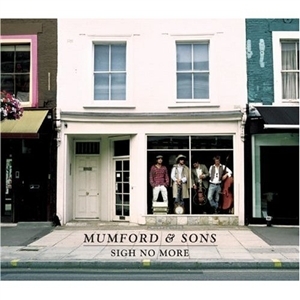
Sigh No More by Mumford and Sons is a great album. But, contrary to many Christian commentators I cannot see it as an album full of grace.
Marcus Mumford is the son of two of the leaders of the Vineyard group of churches in the UK [1]. But in interviews he and the other band members don't speak very much about their religious beliefs so, although it seems at least some of them are Christians [2], I don't know what he believes now. The album is full of biblical allusions and Christian jargon, but it is also an album of struggles with a God who accuses.
I think "Roll Away Your Stone" is a song in conversation with God, although you can also imagine it being between Mumford and his parents. It contains a description of grace in the third verse drawing upon imagery from the Parable of the Prodigal Son in Luke 15 (which has echos in other parts of the album).
It seems that all my bridges have been burnt
But you say that's exactly how this grace thing works
It's not the long walk home that will change your heart
But the welcome I receive with the restart
By itself that is powerful indication that he knows something of the power of grace to conquer all that he has done. And yet, the walk is a 'long' one and it is not clear whether he thinks he can make it to the welcome at the end.
The rest of the song is much darker. The first verse is an invitation to mutual confession and investigation into past. He'll "roll away" the stone to let the light into the cave/grave of his soul, but he's afraid of what he "will discover inside". In the second verse he recalls how he's been told that he would find within his soul a "void" or "hole" (perhaps the god-shaped hole people often talk about). But on self-examination he has filled that hole "with things unreal" that steal his character.
He recognises that this all seems quite dark, so in the chorus he protests that he should sing about it becuase "it dominates the things" he sees.
As the third verse of grace I quoted follows these bleak reflections on his sins, you may see a movement from guilt to forgiveness in the song. But the fourth and fifth verses suggest that he doesn't embrace this "grace", but recoils from it.
"Stars hide your fires" is a quotation from Macbeth Act 1, Scene 4:
Stars, hide your fires,
Let not light see my black and deep desires
And John 3:19-20 is also brought to mind:
Light has come into the world, but people loved darkness instead of light because their deeds were evil. Everyone who does evil hates the light, and will not come into the light for fear that their deeds will be exposed.
The light has shone into his life, he's seen his plight, but I'm not sure that he can embrace the salvation in verse 3. He will stick his stake in the ground "Marking the territory of this newly empassioned soul". He wants to declare his ownership of his own soul because, as he says to the person he is addressing, "you've gone too far too far this time" and have no justification "to take this soul that is so rightfully mine".
It seems that he comes so close but in the end cannot surrender his life to a God he doesn't quite trust or love. It's really a very sad song, and a very sad album.
In other songs he suggests that the accusation of sin is what has driven him from God. In "the Cave" he sings, "The shame that sent me off from the / God that I once loved". "Timshel" is a reflection on the Lord seeming to offer a choice to Cain of whether sin will rule over him or not according to John Steinbeck's East of Eden. "Little Lion Man" is dominated by guilt and the fear that "grace is wasted". "Thistle and weeds" has obvious illusions to the Parable of the Sower. In "Awake my Soul" he looks to the day when he will "meet [his] maker" - not a phrase used by those looking forward to Christ's return.
"Dust Bowl Dance" is perhaps the darkest song of all. To me he seems to see Jesus, God's "only son", as his "accuser" who will lay out the singer's crimes before announcing he'll get his gun to execute judgment. The singer then steals himself, admits his crimes but seems to declare he'll fight back by going to get his own gun!
Please correct me if you think I'm hearing the album wrongly, but the grace is surely a minor note in the Album. Perhaps I'm the one only seeing darkness, but guilt seems to be the dominant note.
Instead of being laid at the foot of the cross, Sigh No More is an album where recognition that we are sinners drives Marcus Mumford to stand his ground and take on his accuser head on. However, what seems clear is that doing that has not led to release from the guilt that haunts him. His experience does not seem to have been that of Charles Wesley when he let light into the dungeon of his heart:
Long my imprisoned spirit lay,
Fast bound in sin and nature’s night;
Thine eye diffused a quickening ray—
I woke, the dungeon flamed with light;
My chains fell off, my heart was free,
I rose, went forth, and followed Thee.
My chains fell off, my heart was free,
I rose, went forth, and followed Thee.
I've been wondering about the origin of this definition of sin for a while. Kelly Kapic unpacks it.
First Augustine identified that we stop loving God and start loving his material gifts:
"St Augustine spoke of sin as that which bends or curves us to the ground, making us more like the beasts and less like the God whom we were to image. He speculated that we were created to have our heads and hearts raised toward Yahweh, and that sin is that which turns our gaze from him."
Then
Martin Luther picked up this imagery in the Reformation, arguing that sin actually bends or curves us upon ourselves (homo incurvatus in se). We were disigned to embrace God and others, but instead we are now consumed with ourselves.
As Bruce Waltke describes it, Satan distorts the perspective of our first parents by emphasizing God's one prohibition, not his provision:
Adam and Eve are surrounded by wonderful trees and provisions in the garden, including the tree of life, but all Eve can see is the one tree of which they cannot partake. Once Satan can get our eyes on what we cannot do, we are sure to do it.
The garden is Paradise: if humanity fails in this ideal setting, then there is no hope for humanity to keep faith anywhere else... In contrast to much sociological thinking, namely, that the way to improve humans is to improve their environment, humanity at its best rebels in the perfect environment. Sodom and Gomorrah, where humanity sunk to the lowest levels of violence and sex, was at the time like the "garden of the LORD" (Gen. 13:10). Our modern world is no better.
"According to Christian teachers, the essential vice, the utmost evil, is Pride... Pride leads to every other vice: it is the complete anti-God state of mind." (p.100, CS Lewis, Mere Christianity)
"unbelief alone commits sin, and brings forth the flesh and pleasure in bad outward works, as happened to Adam and Eve in paradise...Unbelief is the root, the sap, and the chief power of all sin." (p.100, Martin Luther, "Preface to the Epistle of St Paul to the Romans" in Timothy F Lull Ed, Martin Luther's Basic Theological Writings)
So who's right; Lewis or Luther?
I think that Luther is right because, as David Powlison points out, unbelief is the act of erasing God from reality. And as GK Chesterton once observed, when we "cease to worship God, we do not worship nothing, we worship anything". If God is not king then perhaps I am, or perhaps my father is, or my boss, or cancer, or [fill in the blank]. Or perhaps they're all kings, with no one all-powerful or deserving of exclusive worship, but some are more powerful and worthy than others. Either way, whether it is ourselves, other people or any other created thing, all other sins are just trying to fill that imaged god-shaped hole in our heart. And often the thing we fill it with is not something we love, but something we're petrified of because it can take as well as give.
Just Love: Why God must punish sin (currently half-price at the Good Book Co) is a good little book by Ben Cooper, formally an economics tutor at Oxford and curate of St Helen's Bishopgate, now researching a PhD on the Gospel of Matthew in Sydney.
It's written for the Christian/seeker who is seriously concerned why God must punish evil. Unfortunately I can't think of another book setting out to do the same thing, and yet it is surely one of the most important objections people have to Christianity. Does anyone know of any other books on this? Seriously, I would like suggestions.
The book is pure St Helen's Bishopgate in style and content, so your feelings about the book would probably be easily predicted by your thoughts on that particular flavour of teaching. I quite liked it. It is neither over-emotional, nor unfeeling. It is very clear, although maybe a little demanding for its intended audience. Very faithful to the Bible it was more expository than I expected, and he was always concerned to keep the cross at the centre throughout.
As criticism, I found the overall structure was a little confusing despite regular signposting, and the explanatory diagrams could do with revising as I found them quite hard to grasp. I also thought a bit more discussion on hell, particularly in a way that empathetically addressed the struggles of those who are worried about friends and relatives, would have been helpful.
The GBC should be congratulated on publishing such a helpful resource for the church. I really liked the cover too. Although if they ever reprint they should proof-read it for typos and correct the mis-numbering of the chapters which was particularly embarrassing (I'm sorry, I know that I, of all people, have no right to criticise typos).
After the introductory chapters, the argument of the book could be summarised as:
Chapter 2: God is Love. "God is love" in the context of 1 John shows that God's love is best understood in God sending his Son to die for us. If we consider how the Bible describes this act of love it is clear that Jesus died to take the punishment for our sin. Not only that it explains that there was no other way for us to be saved. Punishment had to happen.
Chapter 3: Real Outrage. As CS Lewis identified there is something dehumanising about reducing the purpose of punishment to either rehabilitation or deterrence. Our intuition tell us that certain crimes deserve retributive punishment. Although we may be quicker to cry out for the punishment of others than ourselves.
Chapter 4: God is Creator. God graciously provided for us in creation. As he is the Creator he has the right to decide what is good and evil. He promised that if we tried to take this role that belonged to him he would punish us. Because sin is refusing to be dependant on him, punishment by being cut off from the presence of God who is the source of life is a fitting response.
Chapter 5: God is LORD. Sin is unbelief and calling God a liar. As God's name is defamed he has to clear his name and demonstrate that he is God. He has to show that he is just and has authority as he claimed in the warning he gave in Adam and Eve. This means that there has to be death either of us or a substitute.
Chapter 6: God is Good. The necessary flip-side of loving good is hating evil. God being good means that he is angry at evil, and he is not so inconsistent that he will not act on this anger.
Chapter 7: Just Love. Jesus provides an escape from God's punishment of sin. He was the one person who didn't deserve death, but by died so that we could live. As the new Adam he reversed the curse of the old Adam for all those that trust in him. The implications of this are that we should (i) put our trust in him, (ii) tell others about the danger they are the rescue, (iii) recognise the seriousness of sin and turn from it, (iv) live a life of love, and (v) rejoice in God's love.
In Luther's brilliant exposition of the First Commandment in his Large Catechism he says something rather strange:
it is the trust and faith of the heart alone that make both God and an idol.
Oswald Bayer, in his explanation of Luther's theology of the human being explains where that sort of thinking is coming from:
The human being is animal rationale, habens cor fingens - a being furnished with reason that has a heart, which imagines, makes pictures, invents...There are thus two basic powers that drive the human being - his rational consciousness and his utopian consciousness. The one defines the intellectual interaction with the world of human beings and is primarily oriented toward the present; the other is located in the realm of the imagination, which focuses primarily on the past and the future - interpreting the past and projecting into the future....The power of imagination fabricates images - sketches of goals for life, of happiness, as well as images of fears about disaster. They are all rational remembrances, diagnoses, prognoses, guided by images that the human heart has imagined and produced, by pictures of fear and hope, which once again are grounded in certain experiences.
Luther's definiton of the human being as an animal rationale, habens cor fingens has its theological validity within creation, but is to be understood first of alll...as a theological description of sin.... In an exactly parallel way, Calvin says: "the fantasy of the human being is a factory that works ceaselessly to make idols."
This is correct if the circumstances of the sinful situation are at are at issue. But at the same time, that which identifies what is appropriate to the creation in this formula still remains: even in faith I am cor fingens, in that I praise God by letting God by God, in that I, when I - in spiritual, spirit motivated (Col 3:16) creativity - accord to him what is appropriate to him. The cor fingens is at work even in a poetic song of praise, but in the sense that it offers thanks. Thus Luther's famous phrase fides creatrix divinitatis [faith is the creator of divinity] is to be understood as follows: the faith is the creator of the deity, to be sure, non in persona sua, sed in nobis - not in and of itself, but in us. We make God to be God, that we give him what is due to him; we let God be God.
(pp.174-175, Martin Luther's Theology: A Contemporary Interpretation)
Can't say I understand it deeply, or that I know what to make of it. But its interesting.
I enjoyed reading The Screwtape Letters by CS Lewis recently. I lot of challenging stuff. I was particularly challenged by his discussion in letter 11 of the four causes of human laughter ('Joy, Fun, the Joke Proper, and Flippancy'). Screwtape identifies flippancy as the most likely to lead people to damnation. It is something I suffer from, and I found his description of it quite brilliant:
Among flippant people the Joke is always assumed to have been made. No one actually makes it; but every serious subject is discussed in a manner which implies that they have already found a ridiculous side to it. If prolonged, the habit of Flippancy builds up around a man the finest armour-plating against the Enemy that I know, and it is quite free from the dangers inherent in the other sources of laughter. It is a thousand miles away from joy: it deadens, instead of sharpening, the intellect; and it excites no affection between those who practice it
Chris Oldfield comments that "the gospel dignifies who we are by calling us into question."
Few people I have read calls humanity to question more than John Calvin. Marilynne Robinson (Pulitzer Prize winning novelist) observes that the extreme disparagements of humanity under sin by theologians such as Calvin comes from an understanding that we have dignity as creatures made just a little lower than the angels (Psalm 8:5).
Cauvin [Calvin] employs a characteristic language [...] including extreme disparagements of the physical body, and more generally of humankind under the aspect of sin or fallenness. [This is done] in the service of an extraordinarily exalted vision of the human soul. It is a form of hyperbole - purity is corruption, pleasure is illusion, wisdom is folly, virtue is depravity, by comparison with the holiness that can be imagined, not as the nature of God only, but as the nature of humankind also [...]
The self-abnegation that is always the condition of a true perception of the self or of God can only be understood as the rigorous imagination of a higher self. This is more complex than it sounds. Cauvin has an unsettling habit of referring to himself or to any other human being as a "worm." [Understood as a reference to Psalm 22] the word describes temporal estrangement from God and at the same time ultimate identity with Christ. In context it is the farthest thing from a term of contempt.
Richard Gaffin makes a convincing argument that ' if we are to understand Paul on salvation on salvation, including the order of salvation, we must understand him on sin' (p. 29, By Faith, Not by Sight). He argues this mainly on the recurrence of phrases like 'for our sins' in the most important of Paul's brief summaries of the Gospel.
He identifies several facets of Paul's treatment of sin:
It is 'anti-relational' (primarily the in relation to God)
It is 'illegal'
It is 'universal'
It is an 'enslaving and corrupting power'
Gaffin considers that sin has 'all sorts of disastrous and ruinous consequences' but the two basic consequences are:
'guilt'; and
'enslavement'
Classically, described as the penalty and power of sin (although Gaffin doesn't mention this). In my view the NPP (esp. Wright) focuses mainly on the latter, and the old perspective on the former.
I think the old perspective is right to emphasise the penalty, as the power of Satan and sin is primarily that of accusation (after all that is what Satan means). But we must celebrate the freedom from both.
Sin [...] is not measured by a law, or a nation, or a society of any kind, but by a Person. The righteousness of God was not in a requirement, system, book, or Church, but in a Person, and sin is defined by relation to Him. He came to reveal not only God but sin. The essence of sin is exposed by the touchstone of His presence, by our attitude to Him. He makes explicit what the sinfulness of sin is; He even aggravates it. He rouses the worst as well as the best of human nature. There is nothing that human nature hates like holy God. All the world's sin receives its sharpest expression when in contact with Christ; when, in face of His moral beauty, goodness, power, and claim, He is first ignored, then discarded, denounced, called the agent of Beelzebub, and hustled out of the world in the name of God.
Tim Keller on the prodigal Son (and the prodigal's older brother). HT Justin Taylor. I love Tim Keller, he really knows how to make you think again about sin, and specifically your sin. Highly recommended.