Pensive, doubting, fearful heart,
Hear what CHRIST the Saviour says;
Every word should joy impart,
Change thy mourning into praise:
Yes, he speaks, and speaks to thee,
May he help thee to believe!
Then thou presently wilt see,
Thou hast little cause to grieve.
“Fear thou not, nor be ashamed,
All thy sorrows soon shall end
I who heav’n and earth have framed,
Am thy husband and thy friend
I the High and Holy One,
Israel’s GOD by all adored;
As thy Savior will be known,
Thy Redeemer and thy Lord.
For a moment I withdrew,
And thy heart was filled with pain;
But my mercies I’ll renew,
Thou shalt soon rejoice again:
Though I scorn to hide my face,
Very soon my wrath shall cease;
‘Tis but for a moment’s space,
Ending in eternal peace.
When my peaceful bow appears
Painted on the wat’ry cloud;
‘Tis to dissipate thy fears,
Lest the earth should be o’erflowed:
‘Tis an emblem too of grace,
Of my cov’nant love a sign;
Though the mountains leave their place,
Thou shalt be for ever mine.
Though afflicted, tempest-tossed,
Comfortless awhile thou art,
Do not think thou canst be lost,
Thou art graven on my heart
All thy walls I will repair,
Thou shalt be rebuilt anew;
And in thee it shall appear,
What a God of love can do.
(John Newton, HT Cat)
John Newton: not just an amazing grace.

Showing posts with label Music. Show all posts
Showing posts with label Music. Show all posts
Sunday, February 26, 2012

Saturday, December 24, 2011
Music
I've just discovered this guy's youtube channel. He has been merrily uploading all my favourite Christian worship music: Gettys, Townend, Sojourn Music, Sovereign Grace, High Street Hymns, Red Mountain and others. I'm never quite sure about the morality of that, but here are a few samples of great stuff that I've (re)discovered through him (and Gill ;-)):
First something Christmassy, then a bit of Good Friday.
Approach my soul, the mercy seat
Where Holy One and helpless meet
There fall before my Judgesʼ feet
Thy promise is my only plea, O God
Send wings to lift the clutch of sin
You who dwell between the cherubim
From war without and fear within
Relieve the grief from the shoulders of crumbling men
O God –
Pour out your mercy to me
My God,
Oh what striking love to bleed.
Fashion my heart in your alchemy
With the brass to front the devilʼs purgery
And surefire grace my Jesus speaks
I must. I will. I do believe. Oh Lord.
Jamie Barnes/John Newton
To See the King of Heaven Fall (Gethsemane)
To see the King of heaven fall
In anguish to His knees,
The Light and Hope of all the world
Now overwhelmed with grief.
What nameless horrors must He see,
To cry out in the garden:
“Oh, take this cup away from me –
Yet not my will but Yours,
Yet not my will but Yours.”
To know each friend will fall away, And heaven’s voice be still, For hell to have its vengeful day Upon Golgotha’s hill. No words describe the Savior’s plight - To be by God forsaken Till wrath and love are satisfied And every sin is paid And every sin is paid
What took Him to this wretched place, What kept Him on this road? His love for Adam’s curséd race, For every broken soul. No sin too slight to overlook, No crime too great to carry, All mingled in this poisoned cup – And yet He drank it all, The Savior drank it all, The Savior drank it all. Stuart Townend & Keith Getty Copyright © 2009 Thankyou Music
Sunday, September 11, 2011
My top 10 songs
For what it's worth, here are my top 10 (in no particular order):
- My Song is Love Unknown (Crossman)
- Before the Throne Above (Bancroft, tune by Cook)
- In Christ Alone (Townend/Getty)
- How Deep the Father's Love (Townend)
- And can it be that I should gain (Wesley)
- When I Survey the Wondrous Cross (Watts)
- I cannot tell why He whom angels worship (Fullerton)
- When I was lost you came and rescued me (Simmonds)
- The Look (Newton, adapted by Kauflin)
- It is Finished (Wesley, Praise version I think)
What are your favourites?
Monday, June 27, 2011
How hymns changed
Shane Lems summarises some of what Barth has to say about hymns in his Church Dogmatics:
Barth talks about Luther's hymns and how they were simply meant to teach the Word of God and Christian doctrine to the common people ... He explains that Luther's hymns are "completely lacking in...all emphasis upon the emotion of the subject. What these hymns contain is adoration and solid communication, confession of faith, confession of sins, proclamation." Luther's hymns don't "demand to lay this or that" upon people's hearts in a subjective, man-centered way. "In these hymns we never find either God’s child or God's Church preoccupied with themselves, but always turning to the recognition and praise of God and his acts."
He then traces Lutheran hymnody and mentions how it later shifted its "epicenter" to the "heart, the soul, the I, the We;" to the subjective aspect of the Christian faith and away from the objective truths.
I a bit too much of a pietist at heart to regret the great hymns pietism produced, but it is interesting to read this because on Saturday I heard the Yorkshire Bach Choir perform Bach's Cantata BWV 80, Ein' feste Burg ist unser Gott. Bach's cantata is based on Martin Luther's famous hymn A Mighty fortress is our God, but it interposes Luther's words with those of Salomo Franck (1659–1725). The difference two centuries made is quite starkly in line with Barth's observations [Luther in blue; Franck in red]:
1. Chorus [Verse 1] (S, A, T, B)A mighty fortress is our God,
A sure defence and armour;
He helps us free from every need
Which us till now hath stricken.
The ancient wicked foe,
Grim is his intent,
Vast might and deceit
His cruel weapons are,
On earth is not his equal.
2. Aria (B) and Chorale [Verse 2] (S)
All that which of God is fathered(2)
Is for victory intended.
With our own might is nothing done,
We face so soon destruction.
He strives for us, the righteous man,
Whom God himself hath chosen.
Who hath Christ's own bloodstained flag
In baptism sworn allegiance
Wins in spirit ever more.
Ask thou who he is?
His name: Jesus Christ,
The Lord of Sabaoth,
There is no other god,
The field is his forever.
All that which of God is fathered
Is for victory intended.
3. Recit. (B)
Consider well, O child of God, this love so mighty,
Which Jesus hath
In his own blood for thee now written;
By which he thee
For war opposing Satan's host, opposing world and error,
Enlisted thee!
Yield not within thy spirit
To Satan and his viciousness!
Let not thy heart,
Which is on earth God's heavenly kingdom,
Become a wasteland!
Confess thy guilt with grief and pain,
That Christ's own soul to thine be firm united!
4. Aria (S)
Come in my heart's abode,
Lord Jesus, my desiring!
Drive world and Satan out,
And let thine image find in me new glory!
Hence, prideful cloud of sin!
5. Chorale [Verse 3] (S, A, T, B)
And were the world with devils filled,
Intending to devour us,
Our fear e'en yet would be not great,
For we shall win the victory.
The prince of this world,
How grim may he be,
Worketh us no ill,
That is, he is destroyed.
One little word can fell him.
6. Recit. (T)
So stand then under Christ's own bloodstained flag and banner,
O spirit, firm,
And trust that this thy head betrays thee not,
His victory
E'en thee the way to gain thy crown prepareth!
March gladly on to war!
If thou but God's own word
Obey as well as hearken,
Then shall the foe be forced to leave the battle;
Thy Saviour is thy shield.
7. Aria (A, T)
How blessed though are those who God hold in their voices,
More blessed still the heart which him in faith doth hold!
Unconquered it abides, can deal the foe destruction,
And shall at last be crowned when it shall death defeat.
8. Chorale [Verse 4] (S, A, T, B)
That word they must allow to stand,
No thanks to all their efforts.
He is with us by his own plan,
With his own gifts and Spirit.
Our body let them take,
Wealth, rank, child and wife,
Let them all be lost,
And still they cannot win;
His realm is ours forever.
Thursday, June 23, 2011
High Street Hymns

One of the joys of revision is listening to a lot of music. An exciting new discovery for me has been High Street Hymns. Coming out of Christ Episcopal Church, Charlottesville, Virginia, they are a bit like the excellent Red Mountain Music but more cheerful and suitable for congregational singing.
This is what they say about their ministry:
Our goal is touch hearts and minds with the love and grace of God, primarily through the forgotten poetry of the Church. By writing new music for long-forgotten hymn texts, we hope to infuse the Church with songs that are both theologically rich and musically accessible. The words we sing each Sunday matter tremendously. They reach into the deepest places of our souls and form us, preaching the Gospel to us again and again.
Alex Mejias talked and performed his way through a few of their recordings here. One word that he used over and over for the words of the hymns he was singing was 'beautiful', and I think the music captures that response to the love of God in Christ.
You can listen to all their music online. The words are lovely (not least the EP of songs about the love of God and 'My Song is Love Unknown').
Saturday, June 11, 2011
Guilt and grace in Sigh No More
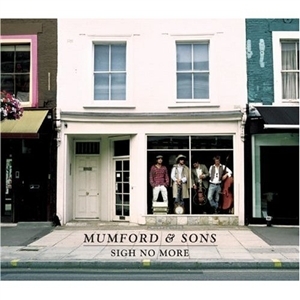
Sigh No More by Mumford and Sons is a great album. But, contrary to many Christian commentators I cannot see it as an album full of grace.
Marcus Mumford is the son of two of the leaders of the Vineyard group of churches in the UK [1]. But in interviews he and the other band members don't speak very much about their religious beliefs so, although it seems at least some of them are Christians [2], I don't know what he believes now. The album is full of biblical allusions and Christian jargon, but it is also an album of struggles with a God who accuses.
I think "Roll Away Your Stone" is a song in conversation with God, although you can also imagine it being between Mumford and his parents. It contains a description of grace in the third verse drawing upon imagery from the Parable of the Prodigal Son in Luke 15 (which has echos in other parts of the album).
It seems that all my bridges have been burnt
But you say that's exactly how this grace thing works
It's not the long walk home that will change your heart
But the welcome I receive with the restart
By itself that is powerful indication that he knows something of the power of grace to conquer all that he has done. And yet, the walk is a 'long' one and it is not clear whether he thinks he can make it to the welcome at the end.
The rest of the song is much darker. The first verse is an invitation to mutual confession and investigation into past. He'll "roll away" the stone to let the light into the cave/grave of his soul, but he's afraid of what he "will discover inside". In the second verse he recalls how he's been told that he would find within his soul a "void" or "hole" (perhaps the god-shaped hole people often talk about). But on self-examination he has filled that hole "with things unreal" that steal his character.
He recognises that this all seems quite dark, so in the chorus he protests that he should sing about it becuase "it dominates the things" he sees.
As the third verse of grace I quoted follows these bleak reflections on his sins, you may see a movement from guilt to forgiveness in the song. But the fourth and fifth verses suggest that he doesn't embrace this "grace", but recoils from it.
"Stars hide your fires" is a quotation from Macbeth Act 1, Scene 4:
Stars, hide your fires,
Let not light see my black and deep desires
And John 3:19-20 is also brought to mind:
Light has come into the world, but people loved darkness instead of light because their deeds were evil. Everyone who does evil hates the light, and will not come into the light for fear that their deeds will be exposed.
The light has shone into his life, he's seen his plight, but I'm not sure that he can embrace the salvation in verse 3. He will stick his stake in the ground "Marking the territory of this newly empassioned soul". He wants to declare his ownership of his own soul because, as he says to the person he is addressing, "you've gone too far too far this time" and have no justification "to take this soul that is so rightfully mine".
It seems that he comes so close but in the end cannot surrender his life to a God he doesn't quite trust or love. It's really a very sad song, and a very sad album.
In other songs he suggests that the accusation of sin is what has driven him from God. In "the Cave" he sings, "The shame that sent me off from the / God that I once loved". "Timshel" is a reflection on the Lord seeming to offer a choice to Cain of whether sin will rule over him or not according to John Steinbeck's East of Eden. "Little Lion Man" is dominated by guilt and the fear that "grace is wasted". "Thistle and weeds" has obvious illusions to the Parable of the Sower. In "Awake my Soul" he looks to the day when he will "meet [his] maker" - not a phrase used by those looking forward to Christ's return.
"Dust Bowl Dance" is perhaps the darkest song of all. To me he seems to see Jesus, God's "only son", as his "accuser" who will lay out the singer's crimes before announcing he'll get his gun to execute judgment. The singer then steals himself, admits his crimes but seems to declare he'll fight back by going to get his own gun!
Please correct me if you think I'm hearing the album wrongly, but the grace is surely a minor note in the Album. Perhaps I'm the one only seeing darkness, but guilt seems to be the dominant note.
Instead of being laid at the foot of the cross, Sigh No More is an album where recognition that we are sinners drives Marcus Mumford to stand his ground and take on his accuser head on. However, what seems clear is that doing that has not led to release from the guilt that haunts him. His experience does not seem to have been that of Charles Wesley when he let light into the dungeon of his heart:
Long my imprisoned spirit lay,
Fast bound in sin and nature’s night;
Thine eye diffused a quickening ray—
I woke, the dungeon flamed with light;
My chains fell off, my heart was free,
I rose, went forth, and followed Thee.
My chains fell off, my heart was free,
I rose, went forth, and followed Thee.
Tuesday, March 29, 2011
Pausing in the dark places
Mike Cosper has a great review of the latest Radiohead album.
He explains part of their appeal:
There’s a kind of alarm bell being sound by Radiohead. They want us to see how deeply trapped we are in the milieu. They offer no solutions, though they hint at the idea of community and connection....It’s a fairly hopeless perspective, but their fans aren’t listening to them for solutions. They listen for solidarity. Someone else feels lost. Someone else feels like everything is too big, too fake, too plastic.
We are used to observing the longing of our culture and our friends for something more than they know. We also know from experience that only Christ can truly satisfy, and if you ask he will give you that living water.
But I wonder if in our various ministries we run too quickly to the good news? (Can I say that?!) Before people want answers and hope, they want to hear "solidarity" - someone else that feels thirsty.
One of the strengths of law-Gospel preaching is that it does just that. It doesn't rush to the Gospel, although that is its goal. It recognises that these feelings do not just belong to those who are not yet Christians, but are known by all Christians as they are continually moving from death to life until the final resurrection of the dead. Having identified with people in the lostness of their broken dreams, destructive relationships, painful experiences, guilt and shame it then carries them with it, out of the tomb into the glorious dawn of Sunday morning.
Wednesday, February 23, 2011
Sing songs
- Sing songs from the historic church.
- Because the foot cannot say "Because I am not a hand, I do not belong to the body" (1 Cor 12:15)
- Sing songs from the contemporary church.
- Because we are ourselves and don't live in the past but the present and should sing new songs, in our language (musical as well as spoken).
- Sing familiar songs
- Because the Gospel, and "Jesus Christ is the same yesterday today and forever" (Hebrews 13:8).
- Sing unfamiliar songs
- Because his mercies are new every morning and we always have fresh petitions and praises (Lam 3:23).
- Sing songs to God
- Because "great is the Lord, and greatly to be praised" (Psalm 96:4)
- Sing songs to the church
- Because we should be edifying one another by "addressing one another in psalms and hymns and spiritual songs" (Eph 5:19)
- Sing songs to the world
- Because we should be seeking to "become all things to all people, that by all means [we] might save some" we should ensure that it is understandable/contextualised as much as possible (1 Cor 9:22; 14:23) calling them to join us in praising God (Ps 117:1)
- Sing songs of lament and reflection
- Because sin, death and the devil are real and horrible we should be honest about it.
- Sing songs that of joy and celebration
- Because nothing is better than the Gospel - "Rejoice in the Lord always" (Phil 4:4)!
[First thoughts and not very polished. Improvements welcome.]
Tuesday, February 15, 2011
God's great symphony resolving disharmony
Why is it that [Mozart] is so incomparable? ... He has heard, and causes those with ears to hear, even today, what we shall not see until the end of time-the whole context of providence. As though in the light of this end, he heard the harmony of creation to which the shadow belongs but in which the shadow is not darkness, deficiency is not defeat, sadness cannot become despair, trouble cannot degenerate into tragedy and infinite melancholy is not ultimately forced to claim undisputed sway ... Mozart causes us to hear that even on the latter side, and therefore in its totality, creation praises its master and is therefore perfect.
(Karl Barth, cited in pp.348-349, Colin Gunton, "Mozart the Theologian", Theology, (1991) 94)
Which is a bit like one of the points Jeremy Begbie makes in this interesting little video a friend sent to me:
At about 5min he explains that in playing the piano, as in life:
Once you've made the mistake there is no going back...
You can't delete that mistake.
What you can do is turn it into a passing note.
A passing note is a note that doesn't fit with the underlying harmony that can be made to fit, can be woven into, the context.
I suppose that is one of the most extraordinary things about being a Christian, that God can take your worst mistakes and turn them into his passing notes.
Saturday, May 17, 2008
The Look
Thanks to Sovereign Grace Music for bringing this old hymn alive with a modern setting (you can download the mp3 free here). I didn't know the hymn before but the words are amazing.
In evil long I took delight,
Unawed by shame or fear;
Till a new object struck my sight,
And stopped my wild career.
I saw one hanging on a tree,
In agonies and blood;
Who fixed his languid eyes on me,
As near his cross I stood.
Sure, never till my latest breath,
Can I forget that look;
It seemed to charge me with his death,
Though not a word he spoke.
My conscience felt, and owned the guilt,
And plunged me in despair;
I saw my sins his blood had spilt,
And helped to nail him there.
Alas! I knew not what I did,
But now my tears are vain;
Where shall my trembling soul be hid?
For I the LORD have slain.
A second look he gave, which said,
"I freely all forgive;
This blood is for thy ransom paid,
I die, that thou may’st live."
Thus, while his death my sin displays,
In all its blackest hue;
(Such is the mystery of grace)
It seals my pardon too.
With pleasing grief and mournful joy,
My spirit now is filled;
That I should such a life destroy,
Yet live by him I killed.
One of the best things about blogs is you can save stuff for yourself at a later date.
Subscribe to:
Posts (Atom)